
Home Safe Every Day
Let's connect and find the solutions that work best for you.
Committed to providing you with the safety you need.












Resources
/News
/Demo Post 5
Demo Post 5

Ferg Deck
27/03/2024
With 75 workplace fatalities in NZ for 2019, it’s time to identify workplace hazards and minimise their risks. While the definition of hazard is ’a danger or something that can cause damage’, ‘risk’ refers to the likelihood of a specific effect within a specified period. For example, a corrosive chemical is a hazard, but the storage risks can be decreased by following the right procedures.
Identify the Hazards
Using WorkSafe New Zealand’s data on work-related fatalities for 2019 helps to determine some of the main workplace hazards. These numbers do not include members of the public who died as a result of someone else’s work activity, or deaths from occupational disease.
The following list cites 77 accident types. That’s because some incidents involved more than one hazard.
Vehicle incidents accounted for 33 of these deaths. The following fatalities were also recorded:
- 6 falls from height
- 6 falls on the same level.
- 5 people died from falling objects.
- 4 deaths were ‘Unspecified’
- 3 people were trapped between moving and stationary objects
- 3 were hit by moving objects
- 3 people died from contact with electricity
- 3 from ‘Transport’
- 2 fatalities were attributed to ‘Single contact with chemical’
- 2 deaths from mobile plant roll-over
- 2 from being bitten or hit by an animal
- 2 were classed as ‘environment’
- 1 explosion
- 1 drowning
- 1 trapped in moving machinery or equipment
Do a Job Hazard and Risk Analysis
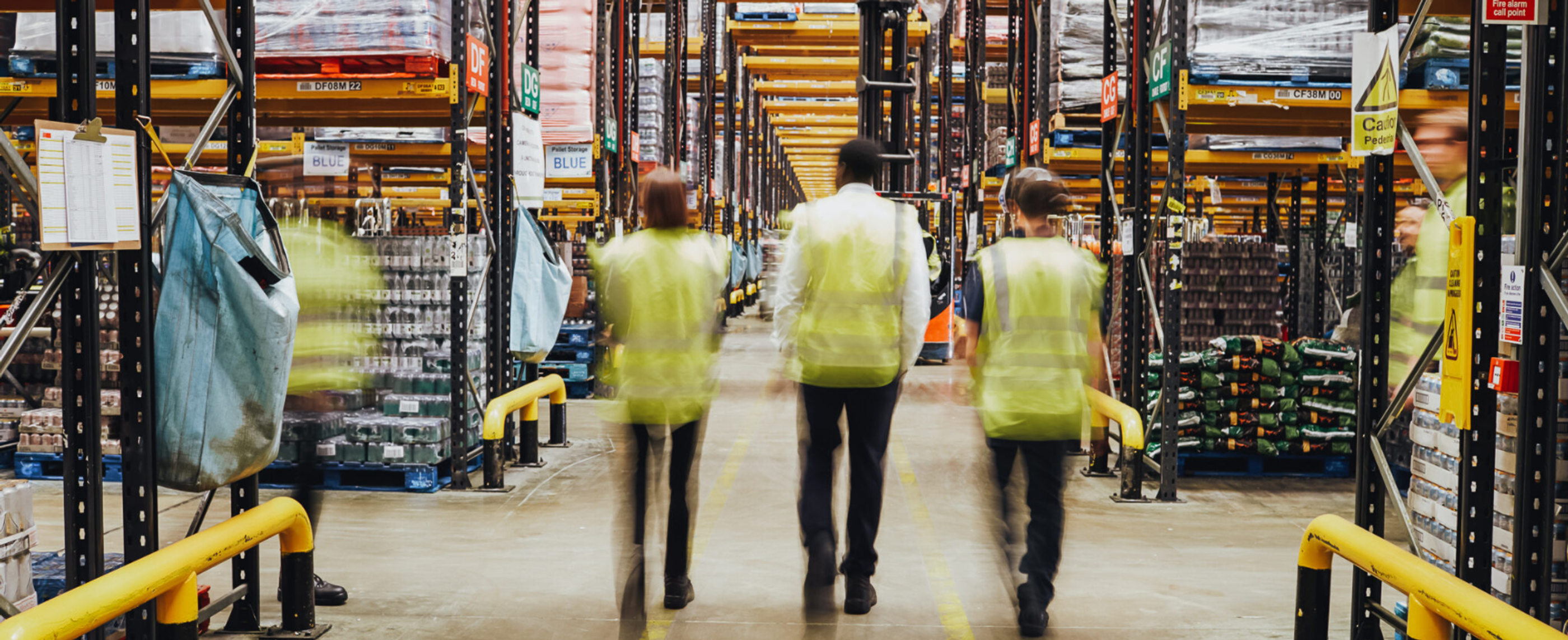
Scrutinise your plant or warehouse for hazards. Assess all processes from receiving, through manufacturing, order-picking and maintenance to shipping.
Discuss the following questions with your Health and Safety Manager.
- What can go wrong?
- What are the consequences?
- How could it arise?
- What are other contributing factors?
- How likely is it that the hazard will occur?
Implement Measures To Eradicate or Lower The Risks
Hazard and Critical Control Points in your operation:
Vehicle Accidents
Company safe driving policies plus employee Safe-Driver training can reduce the risk of accidents.
Keep all vehicles in good repair.
Docks
Edges of the dock should be clearly demarcated – preferably protected with a Flex impact handrail. The HP Plus is able to absorb crashes with heavier vehicles and guarantee the safety of passing pedestrians. It’s a great safeguard on company sites where there is constant movement of forklifts, pallet trucks, and other heavy vehicles.
Like everywhere else in your operation, people and mobile plant must be kept separate. Safety measures include signage, expandable barriers and heavy duty barriers.
Heights
Don’t rely on workers to keep themselves safe. Elevated walkways should be equipped with handrails between 900 mm and 1100 mm in height with a single mid rail located halfway between the work platform and the top rail. – SARNZ (Scaffolding, Access and Rigging New Zealand)
The Double AXES GATE is specifically developed as fall protection for cage ladders and work platforms.
Falling Objects
Toe boards should be installed on walkways to prevent tools or objects landing on people below. Hard hats are necessary too.
Our Flex Impact Rack Protection System is designed to help prevent rack collapse due to crashes. It fits onto most sizes of rack supports.
Falls on the Same Level
Surprisingly, falls from height and falls on the same level both resulted in 6 fatalities.
Keep floors in good condition
Walking surfaces should be clear of clutter. Watch out for cords.
Use clear signage
Install handrails boards should be installed on walkways to prevent tools or objects landing on people below. Hard hats are necessary too.
Electrocution
Identify and label electrical hazards
Only use equipment made for the job on hand
Use non-conductive ladders
Hot outlets = danger. Could be bad wiring
Extension cords – never staple or nail in place
Wear protective clothing and use insulated tools around electrical hazards
Chemical Exposure
Follow the manufacturer’s and government directions for all chemicals. Be alert to the danger of carbon monoxide poisoning caused by running petrol engines indoors.
Mobile plant roll-over
Worksafe NZ has put together an ‘Approved code of practice for operator protective structures on self-propelled mobile mechanical plant’.
At Dexters we know that workplace accidents cannot be taken too seriously. Make us a part of your Health and Safety team. It’s our job to provide solutions that lower or remove risks for you, your staff and your facility.
Home Safe Every Day
Let's connect and find the solutions that work best for you.
Committed to providing you with the safety you need.